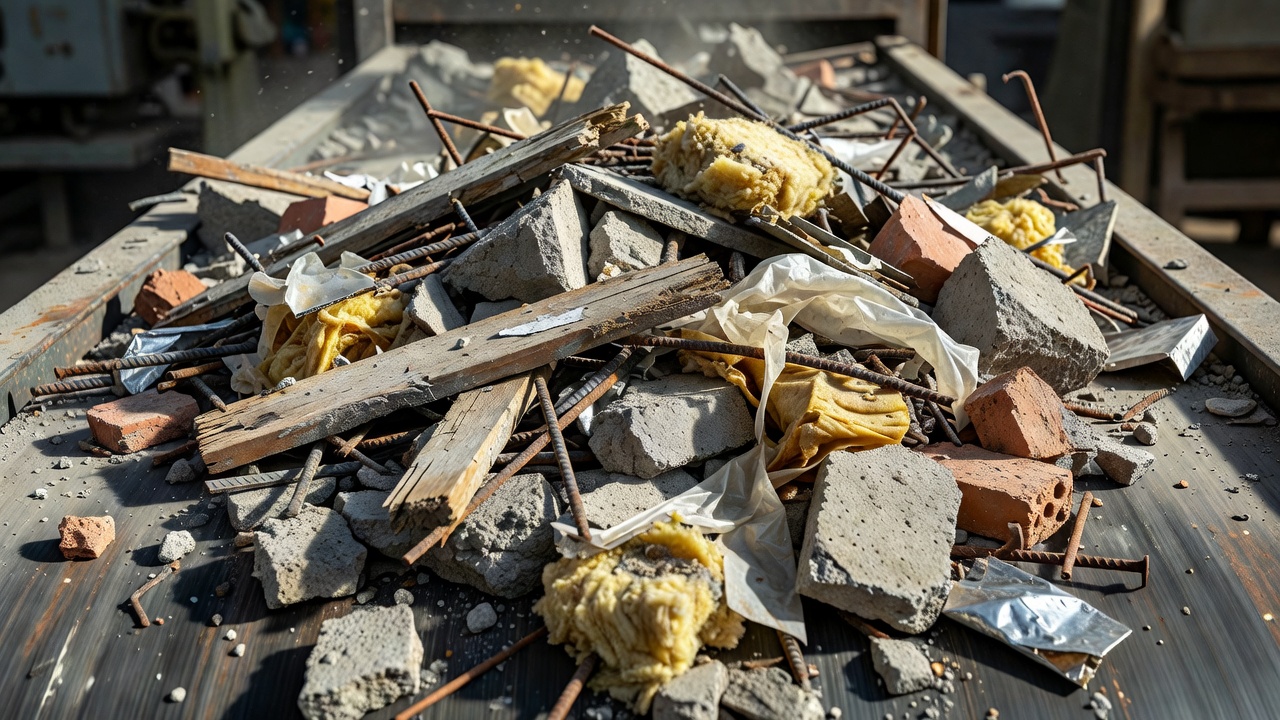
A camera does not see a piece of timber, concrete or metal in the same way a person holding it does. It records an image from a fixed position, under particular lighting, while the item may be moving, dusty, partly covered or touching other material. Computer vision analyses that image to locate visible regions and estimate what they may represent. The result is a description of available visual evidence, not a complete inspection of the object.
From light to usable image
Camera placement and illumination shape the input. A consistent view can make comparisons easier; glare, deep shadow, motion blur and changing exposure can make details harder to separate. On a busy line, a thin piece may lie flat while a bulky object casts a shadow across its neighbour. Dust can soften edges, and reflective surfaces can return a bright highlight that hides texture. These are practical operating conditions, not unusual exceptions to the general problem.
Some installations use more than one view or sensor type, but additional viewpoints do not erase every blind spot. Material can remain hidden underneath another object. A camera may identify the exposed face while missing a composite core, attached fastener or coating. Teams should therefore ask which part of an item was observable and whether that view is adequate for the intended decision.
What an image can support
Vision software may detect object boundaries, compare shapes, identify surface patterns or locate regions that resemble classes represented in its training examples. The exact approach depends on system design. In operational terms, it can help convert a stream of images into signals that people and machinery can use. It cannot, from an ordinary visual image alone, establish every property that matters to reuse, recycling or compliance.
Shape and colour are especially easy to overinterpret. A broken board can resemble a different wood product; a concrete fragment may carry plaster or soil; metal may be painted, oxidised or partly concealed. Similar-looking items can have different compositions, and the same material can look different after weathering, breakage or handling. Visual classification should be understood as a probabilistic judgement conditioned on the examples and operating environment available to the system.
Make the camera view auditable
Recovery teams can make the technology easier to assess by recording the camera position, belt conditions, image quality and reasons for intervention. Review a range of typical loads, not only clean demonstration samples. Include crowded scenes, unusual objects and material that is dirty or damaged. When a system produces a result, ask whether an operator can relate it to a visible part of the image and understand what happens when that view is ambiguous.
Useful review is not just a question of whether a label appears. It includes examining missed objects, duplicate detections, uncertain classifications and changes in performance as incoming material changes. The label set should map to a real operational purpose. If workers need to separate a particular stream, categories that do not distinguish relevant contamination may add little practical value.
Observation leads to interpretation
The camera view feeds a classification step, but an image is not a material certificate. A transparent account should distinguish what is directly visible, what the model estimates, and what remains unknown. That boundary helps a site decide whether to accept a proposed action, request another inspection or direct an item elsewhere. It also helps non-specialists avoid a common misunderstanding: a system that can recognise some examples does not necessarily understand every object moving past it.
Lighting, belt speed, camera cleanliness and calibration are operational considerations that should be documented alongside the model's intended use. A change in a conveyor or material stream can alter the images reaching the system. Monitoring the input conditions is part of maintaining confidence in the decisions made downstream, rather than assuming a once-installed camera will always receive equivalent evidence.
To see how visual evidence becomes a tentative category, continue to Labels with Limits. The next page considers uncertainty and explains why recognition is not the same as verification.