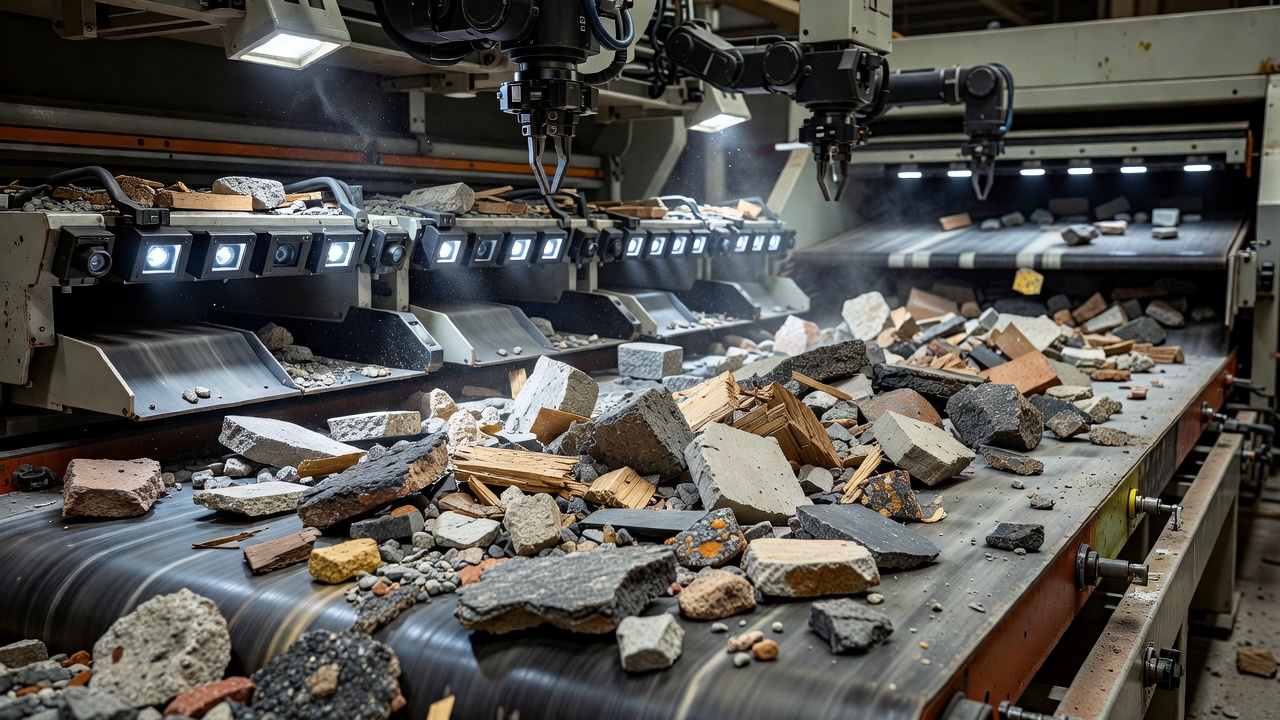
Automated separation joins software decisions to moving equipment. A vision system estimates where a target object is and what category it may belong to. Control software then has to relate that estimate to the position of the object as it travels, determine whether an action is appropriate, and coordinate the selected mechanism. If any link in this chain is unreliable, the physical result may not match the predicted label.
From image location to line position
The camera observes material at one location, while the separation mechanism may be farther along the conveyor. The system therefore needs a way to associate the observed object with its later position. Conveyor speed, object movement, belt tracking and interactions between pieces can affect that estimate. A lightweight piece may shift or rotate; two items may separate or overlap after the image is captured. Timing needs to reflect the real path, rather than an idealised straight journey.
For operators, the important point is not a specific control method but the dependency it creates. Image interpretation, position estimation and equipment response must work together. A decision that arrives too early, too late or for the wrong item can miss its target or disturb neighbouring material. Appropriate installation, calibration, maintenance and performance checks are part of the sorting process.
Different tools, different constraints
Lines can use different separation mechanisms, including timed air ejection, mechanical gates or robotic picking. Their capabilities and limitations vary. An air jet may be suited to particular item sizes and positions but could affect adjacent light pieces. A mechanical diverter can provide a direct route between streams yet may not handle every shape or distribution. A robotic tool may need space and a safe grasping opportunity. These are examples, not a claim that one mechanism is universal or appropriate for every site.
Equipment selection should account for the target fraction, throughput demands, material condition, site layout, maintenance resources and safety controls. A material that is easy to identify may still be difficult to separate because it is heavy, entangled, fragile, irregularly placed or attached to other material. Conversely, a line may be designed to route a broader category without physically handling each item individually.
Deciding when not to act
Automation should have clear boundaries. If an object is poorly visible, its classification is uncertain, it is too close to another target, or the equipment is outside its working conditions, the system needs a defined response. Depending on the process, that can mean no actuation, a fallback route, manual review or another pass. The response must be documented and practical for the crew who works with it.
Failing to act is not necessarily a failure of the entire system. A cautious non-action may protect output quality or reduce the risk of selecting the wrong item. Teams should agree how these cases are counted and reviewed. If every no-action decision is treated as a defect, operators may be pushed toward inappropriate confidence. If exceptions are never examined, recurring problems can remain hidden. Review both the decision and the consequences.
Safety and human oversight
Moving conveyors and automated equipment create hazards that require site-specific safeguarding, procedures and training. A model's prediction does not replace a risk assessment or an operator's authority to stop work. Maintenance access, emergency stops, guarding and safe isolation should be addressed through the equipment's established safety arrangements. This guide cannot replace supplier instructions or competent site advice.
People remain important throughout the line. Operators notice unusual feed conditions, identify jams, observe changes in material and interpret the quality of the output. They need understandable indicators for system status, exceptions and interventions. When they override a proposed action, the reason can help identify an image problem, a changing load or a mismatch between the defined target and practical reality.
Test the complete chain
Evaluation should follow an object from its observed image through its estimated class and commanded action to the stream where it ends up. Looking only at the classifier can miss a timing or mechanical issue. Looking only at a final stream can make it difficult to locate the source of an error. Where feasible, record enough operational information to relate missed or misdirected items back to the stage that needs attention.
Testing should include normal and challenging conditions, including crowded material, irregular shapes and uncertain views. Review whether the equipment acts on the intended object, whether neighbouring material is disturbed, and whether its operating limits are understood. A controlled trial and ongoing checks help teams see how real conditions compare with assumptions made during setup.
Physical separation creates a stream that still needs assessment. Continue to Checking the Output to explore contamination checks and why a sorted fraction should not be treated as verified solely because it passed an automated line.